


Overcoming Restaurant Operational Challenges with a Modern POS System
Posted by By Luis Requejo, HighTech Payment Systems on Mar 3rd 2026
The restaurant industry is characterized by its fast pace, thin margins, and constant evolution. Restaurant owners frequently grapple with a myriad of operational challenges, from managing staff and inventory to ensuring customer satisfaction and maintaining profitability. While traditional methods often fall short, a modern Point of Sale (POS) system emerges as a powerful solution, offering comprehensive tools to streamline operations and mitigate common pain points. This article explores how a contemporary POS system can help restaurants overcome these challenges, fostering efficiency and growth.
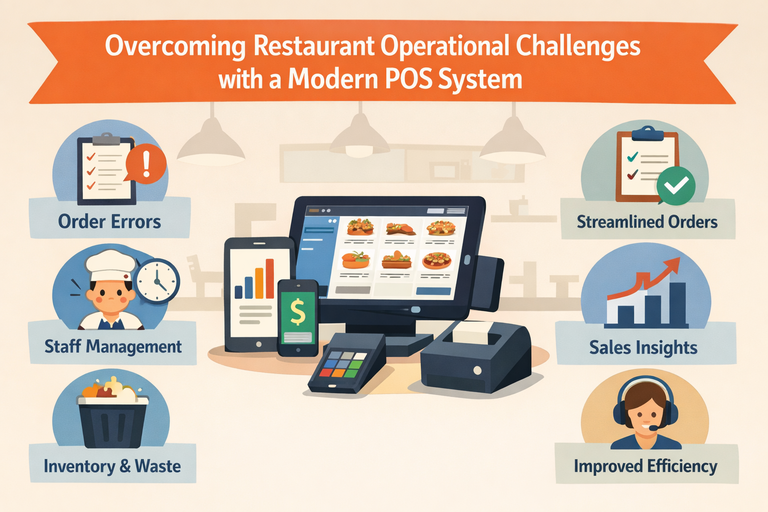
The Challenge of Inefficient Order Management
One of the most prevalent issues in restaurants is inefficient order management, leading to errors, delays, and frustrated customers. Manual order taking can result in miscommunications between front-of-house and kitchen staff, incorrect orders, and slow service during peak hours. A modern POS system directly addresses this by:
- Centralized Order Entry: Allowing servers to input orders directly into the system, which are then instantly transmitted to the kitchen or bar. This minimizes errors and speeds up service.
- Customizable Menus and Modifiers: Enabling easy customization of orders, such as dietary restrictions or special requests, ensuring accuracy and reducing confusion.
- Table Management Features: Providing a visual overview of table status, helping hosts and servers manage seating, track order progress, and turn tables more efficiently.
Inventory Control and Waste Reduction
Food waste and poor inventory management significantly impact a restaurant's bottom line. Without precise tracking, businesses can suffer from over-ordering, spoilage, and theft. A modern POS system offers robust inventory features that transform this challenge into an opportunity for cost savings:
- Real-time Inventory Tracking: Automatically updates stock levels with every sale, providing an accurate, up-to-the-minute view of ingredients and supplies.
- Recipe Management and Costing: Links menu items to their ingredients, allowing for precise calculation of food costs and identification of profitable dishes. This also helps in forecasting ingredient needs.
- Supplier Integration and Automated Ordering: Streamlines the purchasing process by integrating with suppliers and automating reorder points, reducing manual effort and preventing stockouts.
- Waste Tracking and Reporting: Enables staff to record waste, providing valuable data to identify patterns, reduce spoilage, and improve operational practices.
Staff Management and Training Difficulties
High turnover rates and the need for continuous training pose significant challenges for restaurant owners. Managing schedules, tracking performance, and ensuring consistent service quality can be daunting. A modern POS system can alleviate these issues by:
- Simplified Training: Intuitive interfaces and user-friendly designs reduce the learning curve for new employees, allowing them to become proficient quickly.
- Time and Attendance Tracking: Integrates time clock functionalities, accurately recording employee hours, managing breaks, and simplifying payroll processing.
- Performance Monitoring: Provides data on individual staff sales, tips, and order accuracy, enabling managers to identify top performers and areas for improvement.
- Role-Based Access: Allows for customized access levels, ensuring that employees only have access to the functionalities relevant to their roles, enhancing security and control.
Enhancing Customer Experience and Loyalty
In a competitive market, customer satisfaction and loyalty are paramount. Restaurants often struggle to gather customer data, personalize experiences, and implement effective loyalty programs. A modern POS system addresses these needs through:
- Integrated CRM: Captures customer data, including preferences, order history, and contact information, enabling personalized service and targeted marketing.
- Loyalty Programs and Promotions: Facilitates the creation and management of loyalty programs, gift cards, and promotional offers, encouraging repeat business.
- Feedback Mechanisms: Allows for direct customer feedback collection, providing insights into service quality and areas for improvement.
- Online Ordering and Delivery Integration: Offers convenience to customers by supporting various ordering and delivery options, expanding reach and improving accessibility.
Data-Driven Decision Making
Many restaurant owners make decisions based on intuition rather than data, leading to missed opportunities and inefficient resource allocation. A modern POS system provides comprehensive reporting and analytics, empowering owners with actionable insights:
- Detailed Sales Reports: Offers granular data on sales trends, popular items, peak hours, and revenue streams, enabling informed menu adjustments and marketing strategies.
- Labor Cost Analysis: Provides insights into labor costs relative to sales, helping optimize staffing levels and schedules.
- Profitability Analysis: Breaks down profitability by dish, category, and time period, guiding pricing strategies and menu engineering.
- Customizable Dashboards: Presents key performance indicators (KPIs) in an easily digestible format, allowing owners to monitor business health and make proactive decisions.
Conclusion
A modern restaurant POS system is more than just a transaction processing tool; it is a strategic asset that empowers restaurant owners to overcome operational challenges, enhance efficiency, and drive growth. By embracing these advanced solutions, restaurants can streamline workflows, reduce costs, improve customer satisfaction, and make data-driven decisions, ensuring their success in the dynamic culinary industry.