


Why Payment Processors Approve You — Then Quietly Limit Your Growth
Posted by By Luis Requejo, HighTech Payment Systems on Jan 5th 2026
Many merchants believe payment approval is a finish line.
It isn’t. It’s a probation period.
Processors approve accounts based on assumptions: expected volume, transaction patterns, risk exposure, and operational maturity. When reality deviates—even positively—those assumptions collapse.
The result isn’t always termination. More often, it’s something quieter and more damaging: growth suppression.
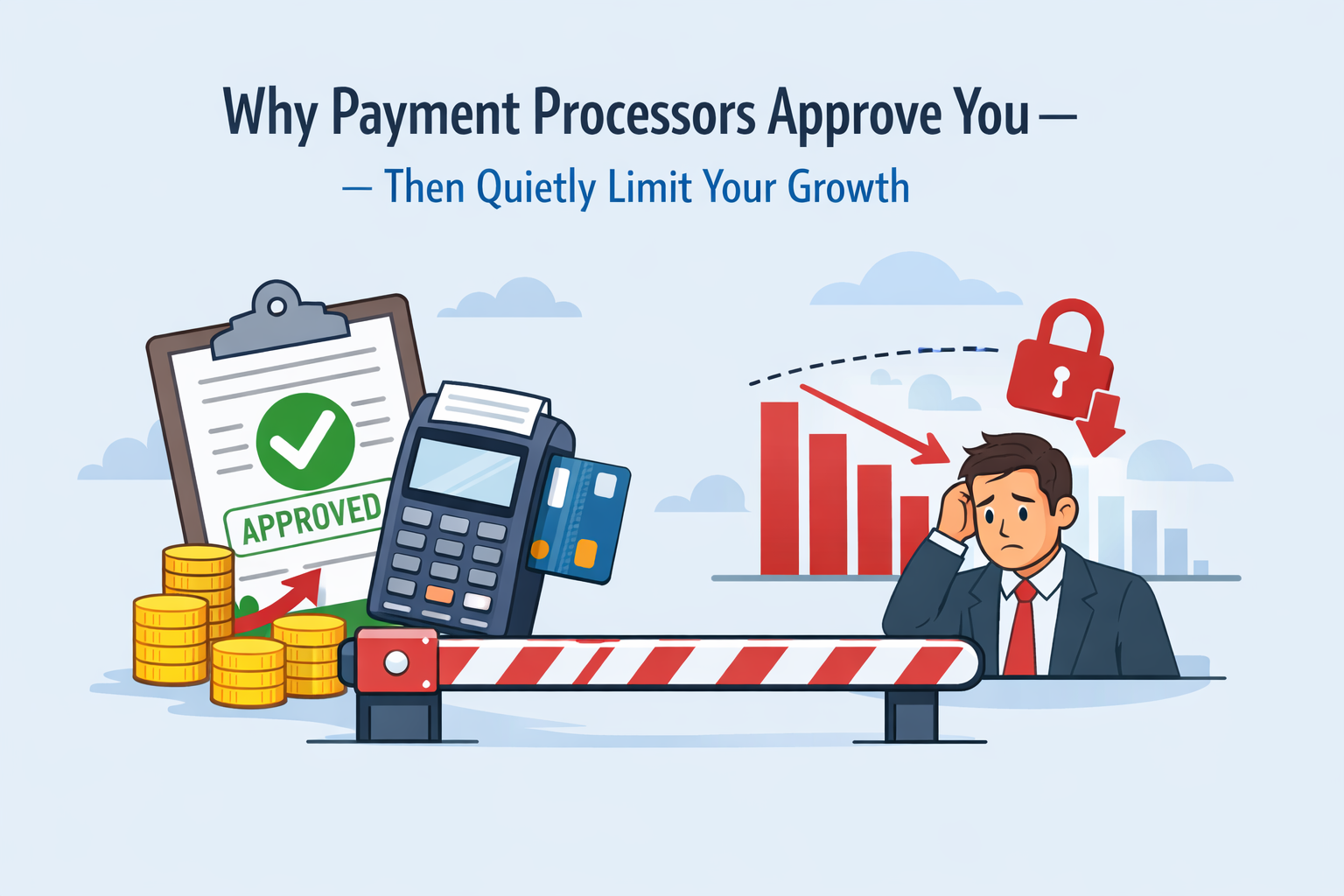
Approval Is Based on a Snapshot, Not Your Trajectory
Underwriting evaluates what your business looks like today — not what it will become.
Processors approve based on:
-
Declared monthly volume
-
Average ticket size
-
Industry classification
-
Fulfillment timelines
-
Chargeback expectations
-
Geographic exposure
What they don’t approve is surprise acceleration.
When your business grows faster than forecasted, it triggers internal risk reviews — even if your metrics are “healthy.”
This is where most merchants get blindsided.
The Three Growth Signals That Trigger Internal Risk Flags
Processors rarely say “you’re growing too fast.”
They just react.
1. Volume Acceleration Outpaces Disclosure
If your processed volume materially exceeds what was declared during onboarding, the processor assumes:
-
Misrepresentation, or
-
Uncontrolled customer acquisition, or
-
Increased fraud exposure
This is true even when growth is legitimate.
2. Ticket Size Creep
Gradual increases in average transaction size change loss exposure models.
What was once a tolerable dispute risk becomes unacceptable at scale.
3. Business Model Drift
Shifts such as:
-
One-time sales → subscriptions
-
Domestic → international customers
-
Physical → digital delivery
These materially alter risk — often without merchants realizing they’ve crossed a line.
How Processors Limit Growth Without Saying “No”
Processors avoid confrontation. They prefer controls.
Common tactics include:
Rolling Reserves
Funds are withheld to offset perceived future exposure. Often introduced suddenly, justified vaguely.
Related reading:
https://www.hightechpayments.com/blog/merchant-account-freezes-why-they-happen-and-how-to-prevent-them-before-cash-flow-stops/
Settlement Delays
Payouts stretch from days to weeks. Cash flow tightens. Operations suffer.
Volume Caps
Daily or monthly ceilings appear without warning. Transactions fail silently.
Manual Reviews
Transactions get flagged for review, slowing fulfillment and increasing decline rates.
These aren’t temporary “reviews.” They’re structural throttles.
Why “Good Metrics” Don’t Save You
Merchants often argue:
-
Low chargebacks
-
Strong authorization rates
-
High customer satisfaction
Processors care — but not first.
Their primary concern is future liability, not historical performance.
If your growth curve suggests:
-
Capital strain
-
Operational fragility
-
Fulfillment risk
-
Regulatory exposure
Your metrics become secondary.
This dynamic is explored further in:
https://www.hightechpayments.com/blog/why-most-payment-providers-collapse-under-chargeback-pressure/
The PayFac Problem Makes This Worse
If you’re operating under a payment facilitator (PayFac), you inherit pooled risk.
That means:
-
Other merchants’ behavior affects your limits
-
Thresholds change without your input
-
Growth triggers platform-wide recalibration
Your success can literally become someone else’s problem.
See the structural breakdown here:
https://www.hightechpayments.com/blog/how-to-spot-a-real-payment-processor-vs-a-leadgen-middleman/
The Mistake Merchants Make After Approval
The most common error?
Silence.
Merchants scale:
-
Marketing spend
-
Inventory
-
Staff
-
Commitments
Without proactively resetting expectations with their processor.
From the processor’s perspective, that’s unmanaged risk.
How to Prevent Growth From Becoming a Liability
This isn’t about slowing down. It’s about controlled transparency.
1. Pre-Declare Growth Scenarios
Processors react better to forecasted growth than surprise performance.
2. Re-Underwrite Before You’re Forced To
Voluntary re-evaluation preserves leverage. Reactive reviews don’t.
3. Align Infrastructure With Trajectory
If you’re moving toward:
-
Higher tickets
-
Subscriptions
-
International sales
Your processing model must evolve before metrics shift.
Related context:
https://www.hightechpayments.com/blog/the-hidden-architecture-behind-a-real-payment-processor-what-merchants-must-examine/
The Hard Truth
Approval is not trust. It’s conditional tolerance.
Processors are designed to protect banks, not enable merchant ambition.
If your payment infrastructure isn’t aligned with your growth trajectory, success will look indistinguishable from risk — and be treated accordingly.
The merchants who avoid throttling aren’t luckier. They’re deliberate.
And that difference shows up long before the first frozen payout.