


The Synergy Between Restaurant POS Systems and Merchant Processing: A Unified Approach
Posted by By Luis Requejo, HighTech Payment Systems on Mar 3rd 2026
In the competitive restaurant industry, efficiency and seamless operations are paramount. While Point of Sale (POS) systems and merchant processing are often discussed as separate entities, their true power lies in their synergy. An integrated approach, where the POS system and merchant processing work in harmony, can revolutionize a restaurant's operations, enhance customer experience, and significantly boost profitability. This article explores the symbiotic relationship between these two critical components and the benefits of a unified solution.
Understanding the Interconnection
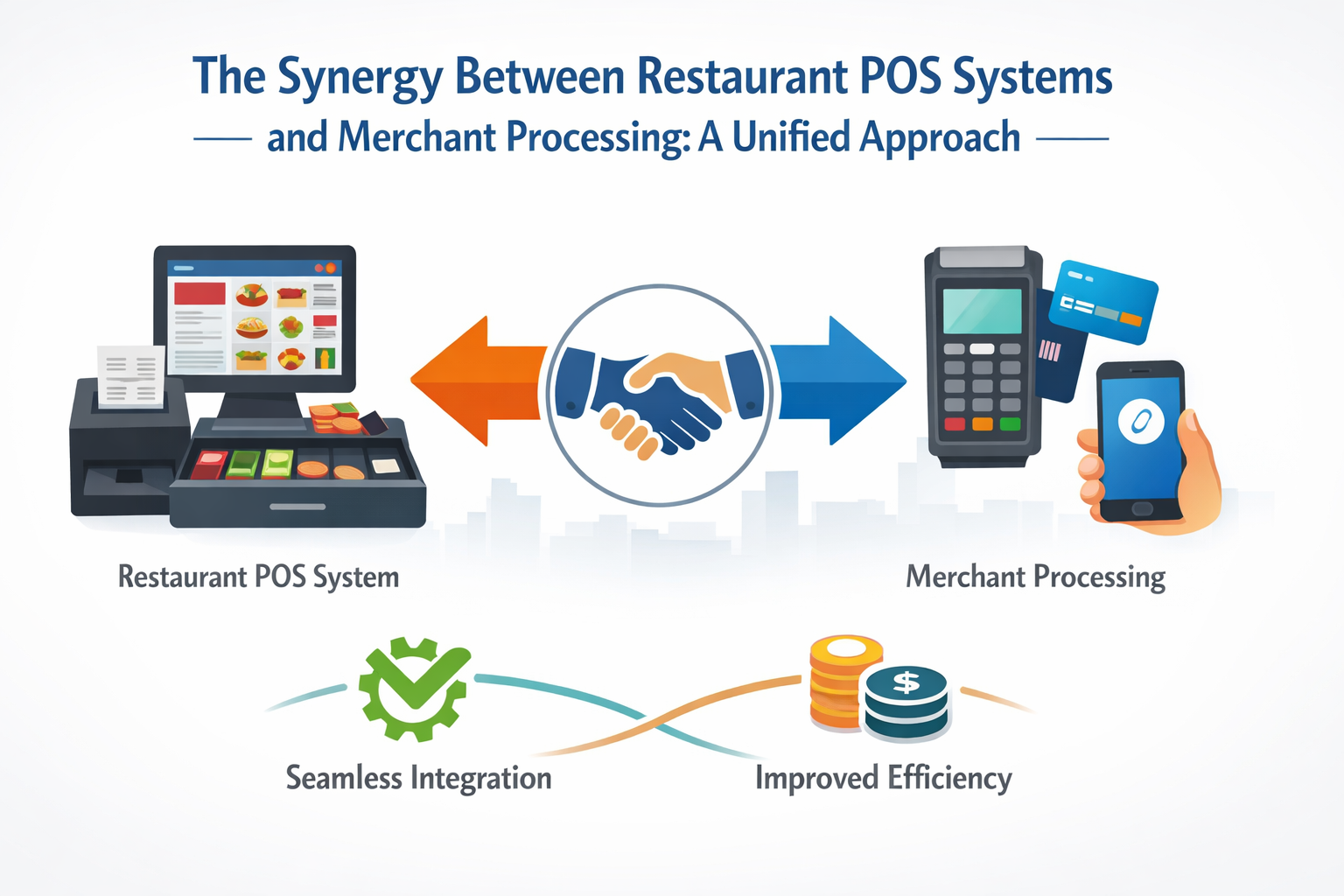
A restaurant POS system is the central hub for all operational activities, from order taking and inventory management to staff scheduling and sales reporting. Merchant processing, on the other hand, is the engine that facilitates electronic payments, ensuring funds are securely transferred from the customer to the restaurant. When these two systems are integrated, they create a powerful, cohesive ecosystem.
Key areas of interconnection include:
- Transaction Flow: The POS system initiates the payment request, which is then handled by the merchant processor. A seamless integration ensures that payment data flows smoothly and securely between the two, minimizing errors and speeding up transaction times.
- Data Synchronization: Sales data captured by the POS system is instantly reconciled with payment data from the merchant processor. This eliminates manual data entry, reduces discrepancies, and provides a real-time, accurate picture of financial performance.
- Customer Experience: Integrated systems allow for faster checkout, support diverse payment options (e.g., contactless, mobile wallets), and facilitate loyalty programs directly through the POS, leading to a smoother and more satisfying customer journey.
Benefits of a Unified POS and Merchant Processing Solution
Integrating POS and merchant processing offers a multitude of advantages for restaurants:
-
Enhanced Operational Efficiency
- Faster Transactions: Reduced steps in the payment process mean quicker table turns and shorter queues, especially during peak hours.
- Streamlined Workflows: Staff can manage orders and payments from a single interface, reducing training time and operational complexity.
- Automated Reconciliation: Eliminates the need for manual end-of-day reconciliation, saving hours of administrative work and reducing human error.
-
Improved Financial Management and Cost Control
- Accurate Reporting: Unified data provides comprehensive sales, payment, and inventory reports, offering deeper insights into profitability and cost centers.
- Reduced Errors: Automated data transfer minimizes the risk of pricing errors, incorrect charges, and reconciliation discrepancies.
- Optimized Pricing: With real-time data on sales and costs, restaurants can make informed decisions on menu pricing and promotions.
-
Superior Customer Experience
- Flexible Payment Options: Customers can pay using their preferred method, including EMV chip cards, NFC mobile payments, and online payment links.
- Integrated Loyalty Programs: Rewards and discounts can be applied automatically at the point of sale, enhancing customer satisfaction and encouraging repeat business.
- Personalized Service: Access to customer purchase history and preferences through the integrated POS allows staff to offer tailored recommendations and service.
-
Robust Security and Compliance
- PCI DSS Compliance: Integrated solutions are typically designed with PCI DSS compliance in mind, ensuring secure handling of cardholder data through encryption and tokenization.
- Fraud Prevention: Advanced security features help protect against fraudulent transactions and data breaches, safeguarding both the restaurant and its customers.
- Reduced Liability: Using compliant, integrated systems can reduce a restaurant's liability in the event of a security incident.
-
Scalability and Future-Proofing
- Adaptability: A unified system can easily adapt to new payment technologies and industry trends, ensuring the restaurant remains competitive.
- Growth Support: As the business expands, the integrated solution can scale to accommodate increased transaction volumes and additional locations without compromising efficiency.
Choosing the Right Integrated Solution
When selecting a unified POS and merchant processing solution, restaurants should consider:
- Industry Specialization: Opt for providers with specific experience in the restaurant sector, as they understand the unique demands of the business.
- Feature Set: Ensure the system offers all necessary functionalities, from order management and inventory to reporting and customer loyalty.
- Pricing Transparency: Look for clear, competitive pricing models for both the POS software and merchant processing fees.
- Customer Support: Reliable 24/7 support is crucial for addressing any issues promptly and minimizing downtime.
- Ease of Use: An intuitive interface reduces training time and improves staff adoption.
Conclusion
The integration of restaurant POS systems and merchant processing is no longer a luxury but a strategic imperative for modern restaurants. By embracing a unified approach, owners can unlock unparalleled operational efficiency, gain deeper financial insights, deliver exceptional customer experiences, and ensure robust security. This synergy empowers restaurants to thrive in a dynamic market, paving the way for sustained growth and success.