


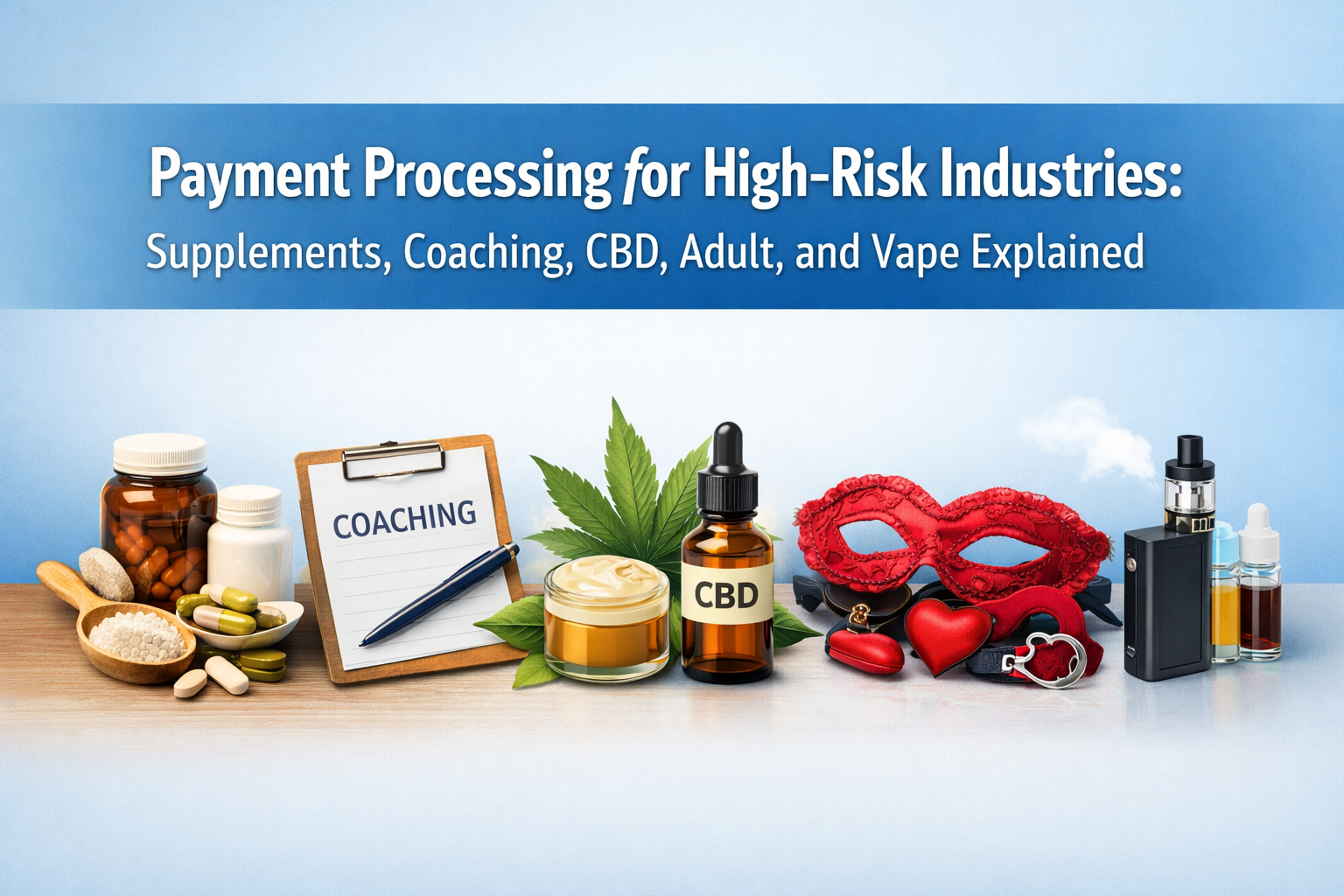
Payment Processing for High-Risk Industries: Supplements, Coaching, CBD, Adult, and Vape Explained
Posted by By Luis Requejo, HighTech Payment Systems on Dec 19th 2025
High-risk industries don’t fail because they’re illegitimate.
They fail because most payment providers don’t understand them.
Processors love to lump everything into a generic “high-risk” bucket. That laziness is exactly why accounts get frozen, reserves spike, and businesses collapse overnight.
Each high-risk vertical has distinct regulatory, fraud, chargeback, and underwriting requirements. Treating them the same is malpractice.
This article breaks down what payment processing actually requires for five of the most commonly misunderstood high-risk industries—and why generic processors are structurally incapable of supporting them.
1. Supplements & Nutraceuticals: Compliance Is the Real Risk
Supplements aren’t high-risk because of fraud.
They’re high-risk because of claims.
Primary risk drivers
-
FDA and FTC scrutiny
-
marketing claims (explicit and implied)
-
before/after imagery
-
influencer endorsements
-
subscription billing
-
refund disputes tied to “results”
What processors must underwrite
-
ingredient lists
-
product labeling
-
marketing language
-
disclaimers
-
fulfillment timelines
-
refund policy clarity
Why processors fail this vertical
Most providers:
-
don’t review claims properly
-
approve merchants too fast
-
ignore marketing risk
-
panic when disputes cite “misrepresentation”
What a capable processor provides
-
pre-approval of marketing claims
-
chargeback reason-code analysis
-
subscription dispute management
-
clear refund and fulfillment controls
-
fraud prevention tuned for continuity billing
If your processor never reviewed your website or ad copy, you’re exposed.
2. Coaching, Courses & Digital Programs: Friendly Fraud Is the Enemy
Coaching and digital education aren’t high-risk because they’re shady.
They’re high-risk because customers regret purchases.
Primary risk drivers
-
high-ticket pricing
-
instant digital fulfillment
-
emotional buying decisions
-
“buyer’s remorse” disputes
-
chargebacks labeled as “fraud”
-
vague refund policies
This is friendly fraud territory.
What processors must understand
-
digital delivery confirmation
-
access logs
-
customer engagement data
-
clear refund terms
-
expectation management
-
chargeback representment strategy
Why processors fail
Most providers:
-
treat disputes as fraud
-
lack digital proof workflows
-
can’t fight “no refund” chargebacks
-
blame merchants instead of issuers
What real support looks like
-
evidence templates for digital goods
-
dispute categorization (fraud vs. service)
-
clear refund cutoff logic
-
pre-chargeback alerts
-
customer acknowledgment capture
Generic processors lose these disputes by default.
3. CBD: Regulatory Ambiguity + Banking Sensitivity
CBD businesses live in a gray zone.
Not illegal—but not universally accepted.
Primary risk drivers
-
inconsistent state regulations
-
THC threshold enforcement
-
banking hesitation
-
card network scrutiny
-
shipping restrictions
-
marketing compliance
What processors must verify
-
lab testing (COAs)
-
THC levels
-
state-by-state legality
-
product categories (topical vs ingestible)
-
fulfillment locations
-
marketing claims
Why processors panic
Banks hate ambiguity.
When processors don’t fully understand CBD risk, they:
-
approve accounts prematurely
-
freeze funds during audits
-
terminate under pressure
-
cite “compliance concerns” with no guidance
What capable processors do
-
underwrite CBD specifically
-
partner with CBD-friendly banks
-
monitor regulatory changes
-
require compliant marketing
-
control geographic exposure
CBD requires specialization—not guesswork.
4. Adult Industry: Reputation Risk, Not Transaction Risk
Adult merchants aren’t high-risk because of fraud rates.
They’re high-risk because banks fear reputational exposure.
Primary risk drivers
-
content classification
-
age verification
-
chargebacks from discretion issues
-
descriptor sensitivity
-
affiliate abuse
-
cross-border traffic
What processors must manage
-
MCC classification accuracy
-
age verification standards
-
descriptor transparency
-
international routing
-
fraud prevention for stolen cards
-
dispute response strategy
Why generic processors fail
They:
-
misclassify MCCs
-
use generic descriptors
-
lack adult-friendly banks
-
don’t support global routing
-
terminate accounts quietly
What real adult-industry processing requires
-
adult-approved acquiring banks
-
clear content boundaries
-
issuer-friendly descriptors
-
advanced fraud tooling
-
international authorization optimization
Adult processing is not about morality.
It’s about bank alignment.
5. Vape & E-Cigarettes: Policy Shifts Kill Unprepared Merchants
Vape businesses face constant disruption—not fraud.
Primary risk drivers
-
regulatory changes
-
shipping restrictions
-
age verification laws
-
network policy shifts
-
payment network bans
-
jurisdictional enforcement
What processors must evaluate
-
product categories
-
nicotine content
-
shipping compliance
-
age verification methods
-
geographic restrictions
Why processors collapse
They rely on:
-
temporary approvals
-
outdated policies
-
banks that change stance
-
reactive compliance
When card networks update rules, weak providers exit the vertical overnight.
What capable processors offer
-
vape-experienced underwriting
-
compliant age verification
-
alternative payment methods
-
clear risk disclosures
-
contingency planning
Vape processing is about policy resilience, not speed.
6. Why Treating All High-Risk Merchants the Same Is a Fatal Mistake
Each of these industries differs in:
-
dispute behavior
-
fraud patterns
-
regulatory oversight
-
issuer sensitivity
-
marketing risk
-
compliance exposure
Processors that don’t specialize:
-
over-reserve
-
over-penalize
-
overreact
-
freeze accounts unnecessarily
-
destroy viable businesses
High-risk is not one category.
It’s dozens.
7. What a Real High-Risk Processor Must Do Across All Verticals
Regardless of industry, capable providers share these traits:
✔ Industry-specific underwriting
✔ Vertical-aware fraud rules
✔ Chargeback strategy by business model
✔ Marketing compliance review
✔ Clear reserve logic
✔ Bank relationships aligned to the vertical
✔ Transparent risk communication
✔ Growth planning, not punishment
Anything less is not high-risk processing—it’s temporary tolerance.
Final Verdict: High-Risk Businesses Don’t Need Approval—They Need Understanding
Most processors chase high-risk merchants for revenue, not because they can support them.
That’s why:
-
accounts get approved easily
-
problems appear later
-
freezes come without warning
-
merchants get blamed
-
funds get trapped
High-risk businesses survive with processors who understand:
-
their industry
-
their customers
-
their disputes
-
their regulators
-
their banks
If your provider can’t explain the specific risks of your vertical, they’re not equipped to support you.
They’re just hoping nothing goes wrong.
And in high-risk industries, something always does.