


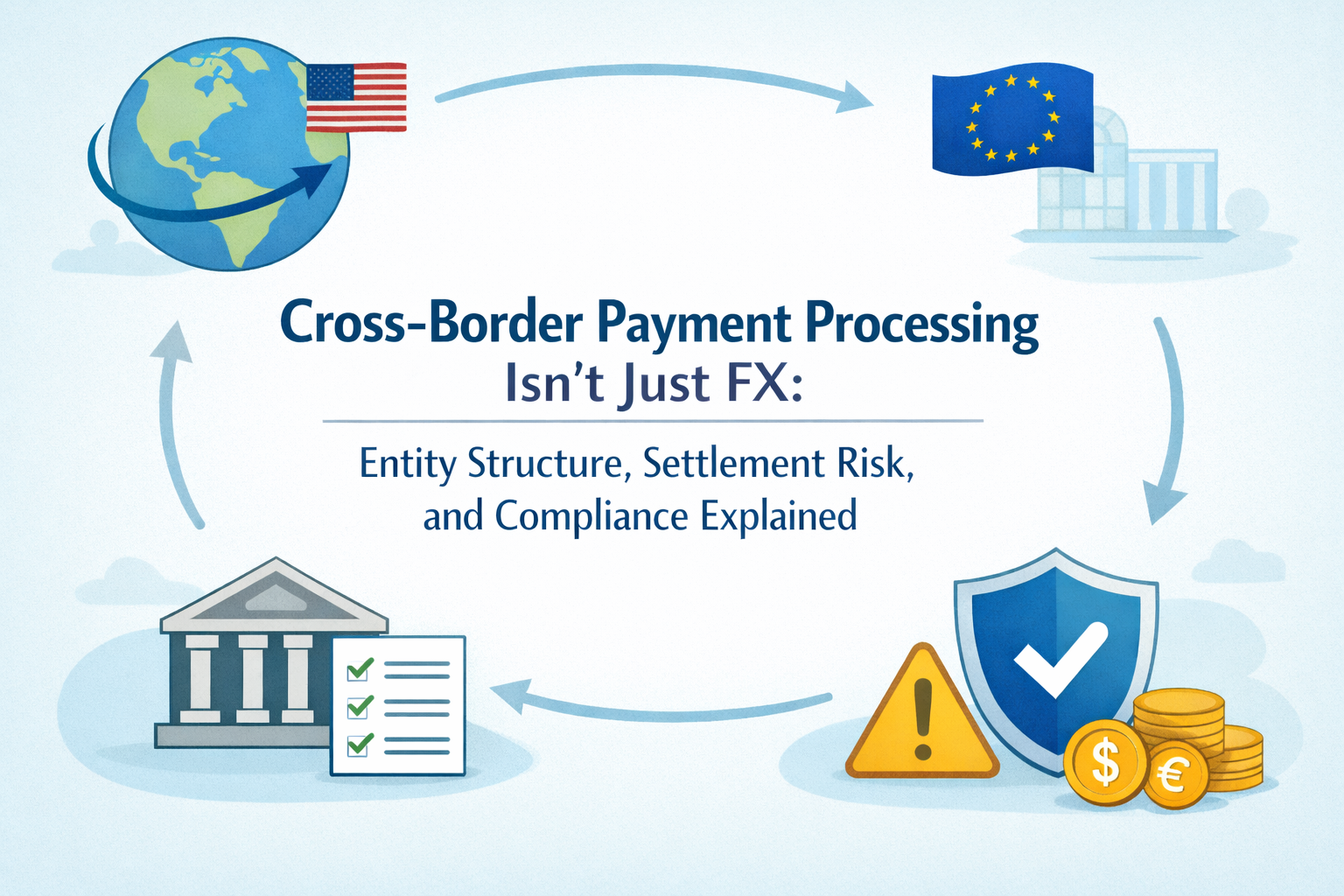
Cross-Border Payment Processing Isn’t Just FX: Entity Structure, Settlement Risk, and Compliance Explained
Posted by By Luis Requejo, HighTech Payment Systems on Jan 26th 2026
Most discussions about cross-border payments focus on exchange rates.
That’s the least important part.
Currency conversion is visible, easy to market, and easy to misunderstand. The real risks in cross-border processing sit underneath: entity structure, acquiring geography, settlement mechanics, and regulatory exposure.
Ignoring those realities doesn’t just increase costs — it destabilizes cash flow and invites sudden processing failures.
Why FX Is the Wrong Starting Point
FX fees are predictable. They’re also marginal compared to:
-
Settlement delays
-
Reserve requirements
-
Regulatory scrutiny
-
Dispute jurisdiction conflicts
-
Tax and reporting exposure
Businesses that optimize for FX first often discover later that they optimized the smallest variable in the system.
Entity Structure Determines How You Are Underwritten
Processors don’t underwrite “global businesses.”
They underwrite legal entities.
Key questions banks ask:
-
Where is the entity incorporated?
-
Where is revenue generated?
-
Where are customers located?
-
Where are disputes adjudicated?
A mismatch between entity location and customer geography increases perceived risk — even if the business is legitimate.
This is where many international merchants hit invisible ceilings.
Local Acquiring vs Cross-Border Acquiring
Cross-Border Acquiring
-
Transactions processed outside the customer’s country
-
Higher interchange
-
Lower authorization rates
-
Greater scrutiny from issuing banks
Local Acquiring
-
In-country processing
-
Improved approval rates
-
Lower dispute friction
-
Higher compliance obligations
Local acquiring is not a “performance upgrade.” It’s a structural commitment — one many merchants aren’t prepared for.
Settlement Timing: The Silent Cash Flow Killer
International settlement introduces:
-
Multi-day clearing windows
-
Intermediary bank delays
-
FX conversion lags
-
Country-specific payout restrictions
What looks like strong international demand can quietly stretch cash cycles from days to weeks.
If your forecasting doesn’t model this, growth creates liquidity stress instead of leverage.
Related context:
https://www.hightechpayments.com/blog/payment-data-accounting-erp-cash-forecasting/
Regulatory Exposure Doesn’t Stop at Borders
Cross-border processing often triggers:
-
Data residency requirements
-
Consumer protection laws
-
Chargeback arbitration under foreign rules
-
Local reporting obligations
Processors do not shield merchants from these realities. They surface them when pressure arrives.
This mirrors a broader truth about outsourced risk:
https://www.hightechpayments.com/blog/payment-risk-you-cannot-outsource/
Why “Multi-Currency Support” Is a Misleading Claim
Supporting multiple currencies does not mean:
-
Local compliance
-
Local acquiring
-
Local dispute handling
-
Local tax alignment
It often means:
-
FX conversion at checkout
-
Cross-border settlement behind the scenes
That distinction matters when volume grows or disputes spike.
High-Risk and Cross-Border: Multiplicative Exposure
When high-risk industries expand internationally, risk doesn’t add — it multiplies.
Factors include:
-
Differing regulatory definitions
-
Inconsistent enforcement
-
Varying dispute thresholds
-
Enhanced monitoring by networks
This is why many international expansions fail silently before being terminated:
https://www.hightechpayments.com/blog/payment-processing-for-highrisk-industries-supplements-coaching-cbd-adult-and-vape-explained/
The Merchant Mistake: Treating Expansion as a Feature Toggle
International expansion is not:
-
A currency switch
-
A gateway setting
-
A pricing update
It is a restructuring of:
-
Risk ownership
-
Cash flow timing
-
Compliance scope
-
Processor relationships
Merchants who skip this step assume processors will “handle it.”
They won’t.
What a Sustainable Cross-Border Setup Looks Like
A functional international payment strategy aligns:
-
Entity structure with customer geography
-
Acquiring strategy with volume and risk
-
Settlement timing with cash needs
-
Compliance ownership with internal controls
Anything less is provisional — tolerated until stress tests it.
The Hard Truth
Cross-border payments don’t fail because of FX fees.
They fail because merchants expand reach without restructuring risk.
If your international revenue depends on a setup designed for domestic processing, you’re operating on borrowed time.
Global scale requires structural alignment — not just broader acceptance.